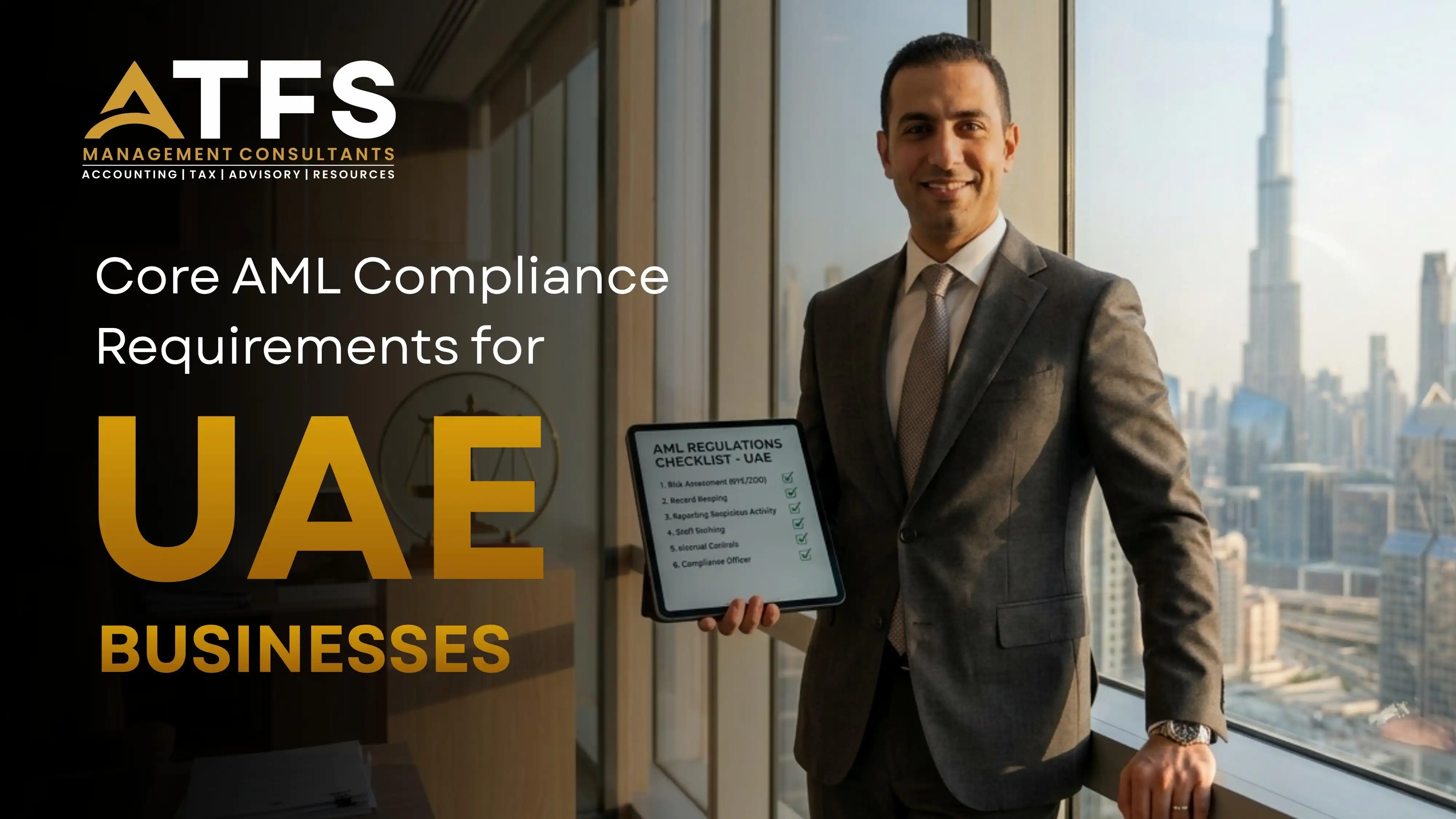
The UAE has rapidly transformed into a global financial powerhouse. With that growth comes a serious responsibility: keeping the financial system clean. In recent years, the Ministry of Economy and the UAE Central Bank have significantly tightened Anti-Money Laundering (AML) and Countering the Financing of Terrorism (CFT) regulations.
For business owners, AML compliance isn't just a "banking thing" anymore. If you are a Designated Non-Financial Business or Profession (DNFBP), which includes real estate agents, gold dealers, auditors, and corporate service providers, you are on the front lines.
Here is a plain-English breakdown of what your business needs to do to stay on the right side of the law.
Appoint a Compliance Officer
Compliance starts with a person, not just a policy. Every relevant business must appoint a dedicated AML Compliance Officer. This person doesn't necessarily need to be a new hire, but they must have the authority and knowledge to oversee your AML program. They are the primary point of contact for regulators and are responsible for ensuring the company follows the rules every single day.
Register on the goAML Portal
The goAML portal is the UAE’s primary platform for reporting suspicious activity to the Financial Intelligence Unit (FIU). Registration is mandatory for all regulated businesses. Even if you never have a suspicious transaction to report, failing to register on the portal can result in massive fines. Think of it as your official "handshake" with the UAE’s financial regulators.
Implement Robust KYC (Know Your Customer)
"Knowing your customer" is the heart of AML. You cannot simply accept funds without knowing where they came from.
- Individual Clients: You need a valid Emirates ID or a passport.
- Corporate Clients: You must identify the Ultimate Beneficial Owner (UBO). This means digging through the layers of ownership until you find the actual humans who own or control at least 25% of the company.
Conduct a Business Risk Assessment
Not every client carries the same level of risk. Your business needs a written document that assesses your specific risks. Do you deal with high-net-worth individuals from "high-risk" jurisdictions? Do you handle large cash transactions? You must categorize your clients into Low, Medium, or High risk and apply "Enhanced Due Diligence" (EDD) to those in the high-risk bracket.
Staff Training and Record Keeping
AML compliance is only as strong as your least-informed employee. You are required to provide regular training to your staff so they can spot "red flags," such as a client who is overly secretive or a transaction that makes no commercial sense.
Additionally, you must keep all records, including KYC documents and transaction logs, for a minimum of 5 years. If an auditor knocks on your door, these records are your only proof that you followed the law.
Screening Against Sanction Lists
The UAE maintains a local Terrorist List, and as a UN member, it also follows the UN Consolidated List. Businesses must regularly screen their clients against these lists. If a name matches, you are legally obligated to freeze the transaction and report it immediately.
Why It Matters
The UAE has moved toward a "zero-tolerance" policy regarding financial crime. The penalties for non-compliance are no longer just a slap on the wrist; they include multi-million dirham fines and the potential suspension of your trade license.
Compliance might feel like a hurdle, but it’s actually a shield. It protects your business from being used by criminals and ensures your reputation stays intact in one of the world's most competitive markets.
Stay updated with expert insights on UAE accounting, tax, and financial advisory, follow ATFS Management Consultants on Facebook, Instagram, and LinkedIn.